Landscape design costs more than many people expect because the price covers planning, site work, materials and skilled labor, not just plants. Grading, drainage, hauling and crew time add up quickly, especially on Northwest Georgia clay and slopes. The fair way to compare quotes is to line up scope, materials and site prep item by item.
Why does landscape design cost more than people expect?
Most homeowners picture the plants. A flat of shrubs looks affordable at the garden center, so a full project quote can feel like a big jump. On a project that includes grading, drainage, hardscape or irrigation, the plants are often only part of the total, and sometimes a modest part. On a planting-focused project, they can be a much larger share.
The rest of the price covers what makes the plants thrive: planning the layout, preparing the ground, moving soil and stone, building features, setting up water, and paying a trained crew for the days it takes. Equipment, delivery and cleanup may also add to the cost.
There is a second reason. A good design considers how the pieces affect each other. A patio needs the right grade and drainage. New plantings need water. Lighting is easier to plan before paths, steps and walls are finished. Pricing a project properly means pricing those connections, not just the visible parts. That is the thinking behind our landscape design and install work, which runs from designs and renderings through plant and sod installation, drainage and grading.
What goes into a design before any plant is installed?
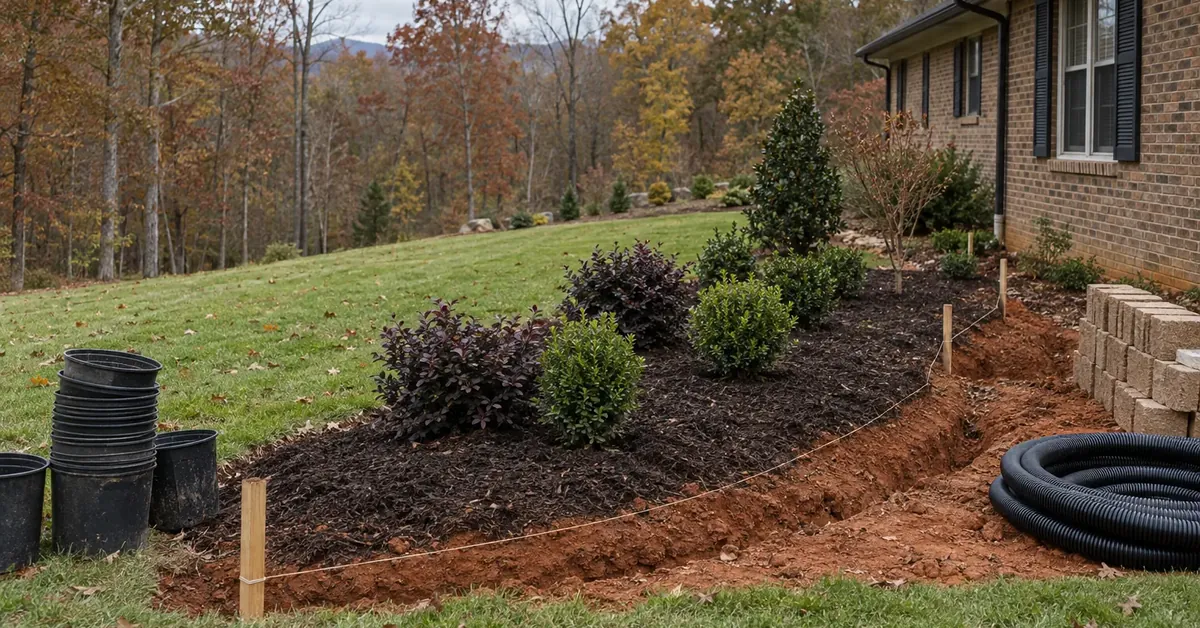
A design is more than a drawing. Before anyone orders a plant, the work typically looks like this:
- Site walk and measuring. Someone looks at sun, slope, existing trees, utilities, where water runs after a rain, and how you actually use the yard.
- Planning the layout. Beds, walkways, gathering areas and screening get placed so they work together and can be built in a sensible order.
- Plant selection. Plants have to suit the light, the soil and the space they will fill in a few years, not just the day they go in.
- Renderings or drawings. These let you see the plan and make changes on paper, which is generally less expensive than changing things after the work is installed.
- Scoping and estimating. Quantities of soil, stone, plants, sod and labor hours get worked out so the quote reflects the real job.
That planning is real work that draws on horticulture and construction knowledge. Our founder, Jody Hardin, went back to school at night and earned a degree in horticulture because he wanted to understand what makes a landscape perform well over time. That kind of understanding is what separates a plan that looks fine at install from one that holds up through the second summer.
How do Northwest Georgia clay, slopes, and drainage affect the price?
This is where local conditions can change the number most. Much of Northwest Georgia has heavy clay soil. Clay drains slowly, compacts easily, and turns sticky when wet and hard when dry. Digging planting holes and shaping beds in it takes more time and sometimes calls for soil amendments or raised planting areas.
Slopes add cost in several ways:
- Equipment and materials are harder to move on a hillside, so labor hours can go up.
- Steep areas can erode if they are not planted or stabilized properly.
- Holding a slope may call for a retaining wall, which is a structural project of its own.
Drainage is the item people most often underestimate. If water collects near the house, sits in a low corner, or runs across a planned patio, plants and hardscape both suffer. Fixing it can mean regrading or a French drain, both part of our landscape design and install work, and we also install dry creek beds to move water across a property. Dealing with water before anything else goes in usually makes sense, because planting over a drainage problem can mean paying twice.
Which choices raise or lower the cost of a landscape project?
These are the main cost factors, with what to look for in a quote for each:
- Site prep and grading. Clearing, shaping and soil work. Clay and slope mean more labor, so look for prep listed as its own line.
- Drainage. Regrading, French drains and dry creek beds involve excavation, pipe and stone. Look for where the water goes, described in writing.
- Plants and sod. Size, quantity and variety all move the price. Look for plant sizes and counts.
- Hardscape features. Patios, walls, walkways and fire pits depend on stone, base work and labor. Look for named materials and base details.
- Irrigation. Cost follows coverage area and complexity. Look for the number of zones and what each covers.
- Lighting. Cost follows fixture count and wiring runs. Look for fixture type and placement.
- Access and size. Gates, slopes and long hauling distances mean hand work instead of machines. Look for any access notes.
Site conditions and the number of features in the plan often cause the biggest swings, though plant size, quantity and selection can also change the total a great deal. A modest bed on a flat, well-drained yard and a terraced backyard with a wall and a drain are very different jobs, even if both are called a landscape project.
A few choices tend to keep cost down without hurting the result. Smaller plants cost less and often establish well. A simpler layout with clean lines is usually cheaper to build than one with many curves and levels. Starting with the most important area and adding to it later also helps. Features like hardscaping, irrigation and outdoor lighting each raise the total, but they are usually easier to include in the original plan than to retrofit after planting and paving are done.
How do you compare landscape design quotes side by side?
Two quotes with different totals are often not quoting the same job. Before you decide which is cheaper, check these things:
- Scope. Do both include design, site prep, drainage, plants, mulch and cleanup? If one quote leaves out grading, you need to account for that cost before the totals are comparable.
- Plant sizes and counts. A quote for twenty large shrubs and one for twenty small ones will differ for a good reason.
- Materials. Stone type, base material and edging should be named, not just called "patio."
- Drainage. If your yard holds water, the quote should say how that is handled.
- What is excluded. Irrigation, lighting and removal of existing material are common extras.
- Payment and timeline. Ask how the work is scheduled and billed.
- Communication. Does the company return calls, provide the estimate, and explain it clearly? It matters because a project can run for weeks.
Ask each company to walk you through the quote line by line. If someone can explain why each item is there, you can usually tell whether the price is fair. If a quote is a single lump sum with no detail, ask for a breakdown before you compare.
When should you start planning for a spring installation?
Late fall and winter are a good time to plan. Spring tends to be a busy season for landscape companies, so starting the conversation a few months ahead leaves time for a site visit, a design, revisions and scheduling. It also gives you time to decide on phases if the full project is more than you want to take on at once.
Planning in the cooler months also lets you think through the order of work. Grading and drainage usually come early, but the exact sequence depends on the design and on access to the site. Irrigation and lighting runs may need to go in before hardscape is finished, and planting typically comes last. Many plants also establish well in fall in our area, so some projects do not need to wait for spring at all.
If you are weighing a project and want a clear, itemized look at what it would involve, you are welcome to reach out to request an estimate. We are based in Kingston and serve homeowners across Northwest Georgia.
Frequently Asked Questions
Is a landscape design worth paying for?
For anything beyond a small planting bed, usually yes. A plan helps catch drainage, spacing and sequencing problems on paper, where changes are generally less expensive than after installation. It also lets you build in phases without redoing earlier work.
Can I phase a landscape project over more than one season?
Yes, and it is a common way to spread cost. Start with a full plan, then build the foundation work first: grading, drainage and any walls. Patios, planting, irrigation and lighting can follow as budget allows.
What should a landscape estimate include?
It should spell out the scope of work, site prep, drainage, plant names and sizes, hardscape materials, and what is not included. Cleanup and a clear description of the work are also worth looking for. If anything is vague, ask for it in writing.
Does adding irrigation or lighting change the design cost?
Yes, both add scope, because they need their own layout, materials and installation time. They are usually easier to plan in from the start, since trenching and wiring are simpler before planting and paving are finished.
What is the cheapest way to improve a front yard?
Start by fixing any drainage or grading problems, then clean up and define the beds, add fresh mulch or pine straw, and add a few well-chosen plants near the entry. Small, well-placed changes often make more difference than a large, scattered project.