
Fall landscape planting works well in Northwest Georgia because cooler air reduces heat stress while the soil often stays warm enough for roots to begin establishing. That does not make September planting automatic. Red clay, slope, runoff, afternoon sun, mature tree roots, and irrigation coverage can change what should be planted and where.
The strongest plan starts with the site, not a shopping list. Decide what the bed needs to do, observe how water moves after rain, measure the mature space, and choose plants that fit those conditions. Correct depth and steady watering matter more than an oversized planting hole or a bag of quick fertilizer.
Key takeaways
- Fall gives many trees, shrubs, and perennials time to establish before summer heat.
- Northwest Georgia clay can hold water, so drainage and planting depth need careful attention.
- Choose plants for mature size, light, and moisture instead of buying only for today's appearance.
- Keep the top of the root ball at the correct grade and avoid piling mulch against stems or trunks.
- Coordinate planting with irrigation, drainage, hardscape, and future maintenance before installation.
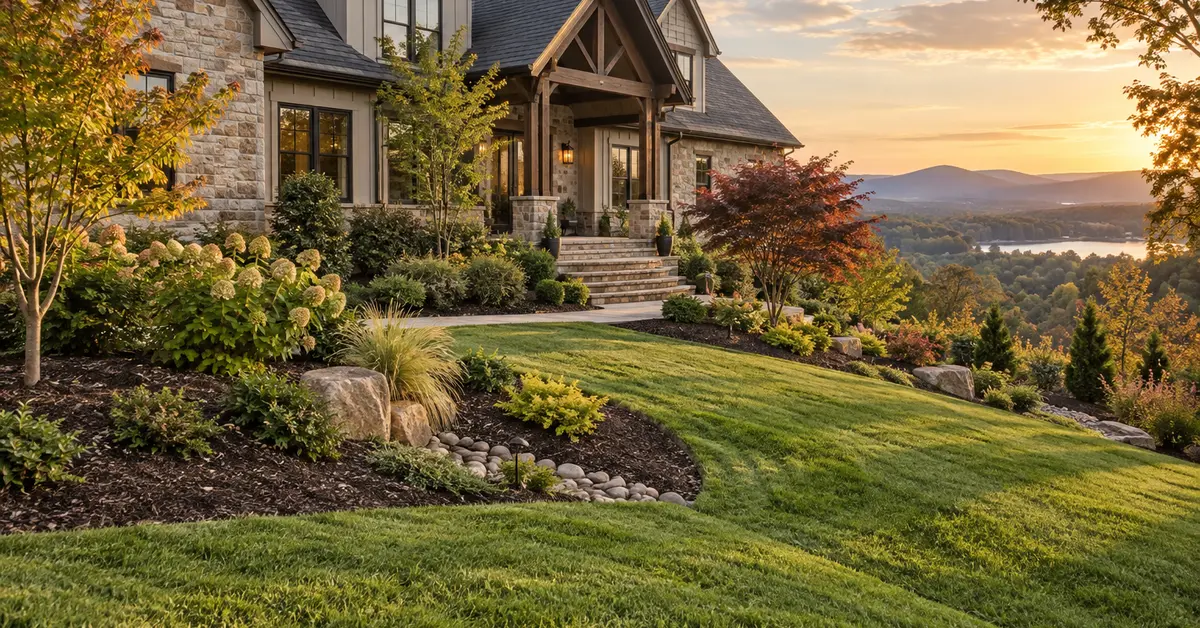
Decide what the planting must accomplish
A front bed, privacy screen, foundation border, slope planting, and patio garden solve different problems. Name the function first. You may need year-round structure, seasonal flowers, screening from a road, erosion resistance, a softer transition beside a wall, or a clearer view from the driveway.
That purpose guides the plant mix and spacing. A privacy screen needs enough density to work, but plants still need room to reach mature width without constant shearing. A bed beside a walkway needs low growth near the edge so branches do not crowd the path. A planting below a roof valley must tolerate the moisture pattern or the runoff must be redirected.
Complete Lawn Service handles planting as part of landscape design and installation, which makes it possible to coordinate plant choices with the rest of the property instead of treating a bed as a separate decoration.
Read Northwest Georgia clay before planting
Clay is not automatically bad soil. It can hold nutrients and moisture. The challenge is that compacted clay drains slowly, becomes sticky when wet, and can turn hard when dry. A plant that prefers even moisture may still struggle if its root ball sits in a water-filled pocket after every storm.
Watch the proposed bed through rain. Note where water enters, how long it stands, and where it exits. Check downspouts, swales, driveway runoff, low turf, and the uphill side of walls. If water remains after surrounding areas have drained, the planting plan may need grading or a different plant palette before the first hole is dug.
The University of Georgia Cooperative Extension's fall gardening guidance recommends fall for planting many trees, shrubs, vines, groundcovers, and perennials. It also notes that clay soils can be poorly drained. The local takeaway is simple: good seasonal timing cannot rescue a plant from the wrong moisture conditions.
For sites with recurring runoff or saturated areas, review irrigation and water management together. An irrigation schedule should not add water to a bed that already receives concentrated roof or slope runoff.
Choose for mature size and daily light
Nursery plants are compact. Landscapes are not. Read the mature height and width, then compare those numbers with windows, utilities, air-conditioning equipment, walkways, eaves, and sightlines. A shrub planted two feet from a foundation may look right on installation day and become a pruning problem later.
Light also changes across a Northwest Georgia property. Morning sun is different from reflected afternoon heat beside brick or pavement. A bed under deciduous trees may receive full sun in early spring and deep shade after leaf-out. Walk the property at several times of day before selecting plants.
Layering usually creates a more durable design than repeating one plant from wall to curb. Use larger structural plants where there is room, medium shrubs for mass and screening, and lower perennials or groundcovers along the front. Keep access open for windows, meters, hose connections, and future repairs.
The Cartersville service page describes the broader mix of landscape, hardscape, irrigation, lighting, and maintenance work that may affect a planting plan on local properties.
Plant at the right depth
Planting too deep is a common and costly mistake. Before digging, find the top of the root ball and the point where the trunk or main stems begin to flare. Soil or container mix may have been piled over that point at the nursery, so the visible top of the container is not always the correct reference.
Set the root ball so the root flare and upper root system sit at the proper finished grade. The hole should be wider than the root ball to loosen surrounding soil, but it should not be so deep that the plant settles. Refill with the site's soil unless the design calls for a tested, specific soil strategy. A sharply different pocket of amended soil can hold water or discourage roots from moving into the surrounding clay.
Break circling roots according to the plant's condition and handle the root ball without pulling on the trunk. Remove tags, wires, and materials that could restrict future growth. Then water slowly to settle soil around the roots, checking that the plant remains upright and at the intended grade.
Use mulch as protection, not a mound
Mulch helps moderate soil temperature, retain moisture, and limit weed competition. Spread it across the bed at a consistent, modest depth. Keep it away from trunks and main stems. A volcano-shaped mound holds moisture against bark and hides the root flare that should remain visible.
Bed edges also affect water movement. A deep trench or raised edge can trap runoff around plants. On a slope, the finished grade needs to slow erosion without creating a basin that stays saturated. This is one reason planting and hardscaping should be planned together around steps, patios, retaining walls, and walkways.
Water new plants without drowning them
New roots need reliable moisture, but a fixed daily schedule can be too much for clay. Water the root ball and surrounding soil thoroughly after installation. Then check moisture before watering again. The top can look dry while the lower root zone remains wet.
Weather should change the schedule. A cool rainy week calls for less irrigation than a warm, windy stretch. Plant size, exposure, slope, and soil also matter.
Do not rely on lawn sprinklers without confirming coverage. Turf heads may wet leaves while missing the root ball, or they may keep a low bed too wet. Review zones and run times with the new landscape rather than assuming an old schedule still fits.
Plan for the first year, not only planting day
Fall installation is the beginning of establishment. Keep a simple plan for watering checks, mulch depth, weed control, staking review, and seasonal pruning. Remove staking when it is no longer needed instead of leaving straps to damage the trunk. Replace dead annual color without disturbing nearby roots.
Think about maintenance access too. Landscape maintenance is easier when plants have room, bed lines are reachable, and the design does not force repeated hard pruning. A slightly simpler plan that fits the site usually ages better than a crowded bed installed for instant fullness.
The Complete Lawn Service Knowledge Center answers related questions about planting, drainage, irrigation, maintenance, and outdoor projects in Northwest Georgia.
Frequently asked questions
Is September too early for fall planting in Northwest Georgia?
Not necessarily. September can be useful once extreme heat eases, but plant type, forecast, soil moisture, and watering capacity still matter. The best date is one that supports establishment without putting new plants into severe heat or saturated soil.
Should I replace Georgia clay with topsoil?
A complete soil replacement is rarely a universal answer. First identify drainage, compaction, grade, and plant needs. Improving a whole bed may help in some projects, but creating a small pocket of very different soil can produce water and rooting problems.
How often should new shrubs be watered?
Water thoroughly at planting, then check the root ball and surrounding soil instead of following a blind daily rule. Frequency changes with weather, plant size, exposure, slope, and how quickly the clay drains.
Can I plant next to a retaining wall or patio in fall?
Yes, if the design accounts for mature size, runoff, wall drainage, base protection, and maintenance access. Coordinate those details before planting so roots, irrigation, and grading do not conflict with the hardscape.
Who can plan a fall landscape installation in Cartersville?
Complete Lawn Service plans and installs landscapes across Northwest Georgia. Request an estimate to discuss the property, planting goals, drainage, irrigation, and long-term care in one conversation.
Build the fall plan around the property
Cooler weather creates an opportunity, not a shortcut. When plant function, mature size, clay drainage, correct depth, water, and maintenance are settled before installation, a fall landscape has a better foundation for its first Northwest Georgia summer.