
On a sloped yard in Northwest Georgia, retaining wall drainage is not a small detail to figure out after the blocks, stone, or planting beds are chosen. The wall, the slope, and the path water takes across the property need to be planned as one working system. That matters in Cartersville, Kingston, and nearby communities because rainfall often moves quickly across compacted soil, driveways, rooflines, and turf before it ever reaches the wall. A good plan starts by asking what the wall is supposed to do, where the water comes from, and where it can safely go.
Why retaining wall drainage comes first on a slope
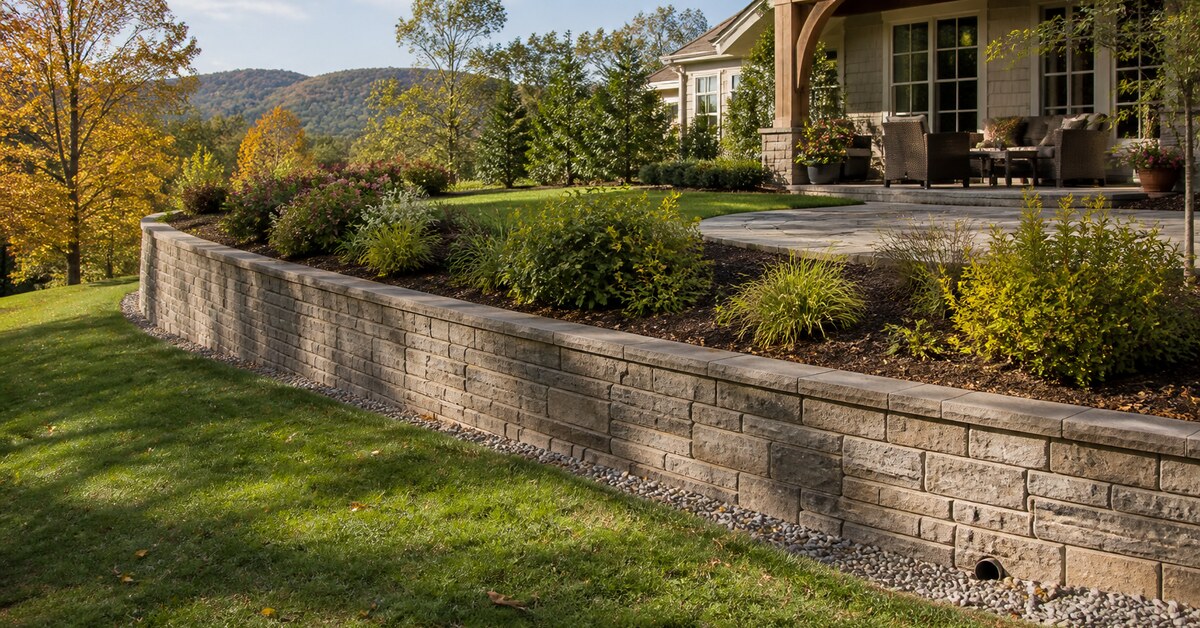
A retaining wall for sloped yard space can create a flatter lawn, frame a patio, hold a planting bed, or make a transition between elevations easier to maintain. Those goals sound simple, but each one changes the drainage conversation. A decorative landscape retaining wall near a bed does not face the same conditions as a taller wall holding back a driveway edge or reshaping a steep backyard.
Before retaining wall installation begins, homeowners should look past the face of the wall and think about pressure behind it. Water trapped in soil can add force, soften areas that need support, and carry sediment into places where it causes trouble. The drainage plan should consider the base, backfill, grading above the wall, surface runoff, and the outlet point. None of those pieces works well in isolation.
Northwest Georgia soils can vary from one property to the next, and red clay or compacted fill can hold water longer than expected. The University of Georgia Extension explains that stormwater runoff can carry sediment and other materials as it moves across landscapes, which is one reason erosion control and runoff direction deserve attention before ground is disturbed: UGA Extension stormwater guidance.
Start by documenting what the yard is already telling you
A retaining wall contractor can learn a lot from a homeowner who has watched the yard through several storms. Take notes before the first design meeting, especially after steady rain. The most useful observations are specific and tied to locations.
Helpful details include:
- Water crosses the lawn from a neighbor, street, driveway, roof valley, or downspout.
- Mulch, pine straw, or soil moves downhill after storms.
- Grass stays thin, muddy, or rutted in the same area.
- Puddles form at the bottom of the slope or near an existing patio.
- An older wall has bulging, leaning, staining, or soil washing through the face.
Photos and short videos are useful because water paths can disappear quickly after a storm. Marking downspout locations, low spots, and access points can also help the planning team understand what equipment can reach and what areas need protection during work.
Plan the wall purpose, grading, and safe outlet together
A wall that only looks correct from the front can still send water to the wrong place. Surface grading above and around the wall should direct runoff in a controlled way instead of letting it pour over the face or collect behind the structure. The safe outlet matters just as much as the collection point. Water should not be redirected toward a foundation, crawlspace, public sidewalk, neighboring property, or unstable slope.
This is where a full site conversation helps. Complete Lawn Service works on retaining walls as part of broader hardscaping service planning, so the wall can be considered alongside patios, walkways, planting beds, turf, and access. When the wall is part of a bigger outdoor renovation, the project sequence should prevent one improvement from creating a drainage problem for the next.
For example, a patio below a slope may need its own drainage discussion before a wall is placed above it. If you are still shaping that outdoor area, our related patio drainage and lighting guide can help you think about hardscape decisions that affect water movement.
Coordinate planting, irrigation, and the finished surface
The finished landscape around a wall influences how water behaves. Planting beds can slow surface flow when they are graded and maintained properly, but they can also trap water against the wall if soil is piled too high or edging blocks the intended drainage path. Turf can help stabilize usable areas, but thin grass on a shaded or compacted slope may still erode.
This is why retaining wall design should connect with landscape design and installation decisions early. Plant selection, bed layout, mulch choice, and maintenance access all affect how the area performs after installation. Irrigation should also be reviewed before work begins. A spray head aimed at the back of a wall, a leaking line, or a zone that waters an already wet slope can work against the drainage plan. If the wall area ties into an existing system, include irrigation service in the project discussion instead of waiting until after plants go in.
Confirm access, utilities, permits, and engineering needs
Every site has limits. Some sloped yards are easy to reach from a driveway, while others require careful planning around fences, trees, narrow side yards, existing structures, or finished hardscapes. Access affects material staging, excavation, spoil removal, and how much of the surrounding lawn may need repair after construction.
Structural design, permits, utility locations, drainage discharge rules, and engineering requirements depend on the project and the jurisdiction. They should be confirmed by qualified professionals before work begins. A taller wall, a wall near a structure, a wall supporting a driveway, or a wall close to a property line may need more review than a small landscape wall. Homeowners should not assume requirements are the same from one neighborhood to the next.
Complete Lawn Service serves homeowners across Northwest Georgia service areas, including those comparing options in town and rural settings. If your property is in or near Bartow County, the Cartersville service page is a useful place to start for local service context.
Questions to answer before retaining wall installation
A productive planning meeting does not need to start with a finished drawing. It should start with clear questions. Before choosing wall materials or planting around the finished area, talk through these points:
- What problem should the wall solve, and what should the space be used for after it is built?
- Where does water enter the area during heavy rain?
- Where can collected or redirected water discharge without creating a new problem?
- How will grading above and below the wall handle surface runoff?
- Will the project affect patios, walkways, fences, irrigation, downspouts, or future planting beds?
- Are permits, utility markings, property boundaries, or engineering review needed before construction?
The best time to make these decisions is before excavation, not after materials are delivered. Careful planning can also reduce rework when the wall is part of a larger landscape upgrade.
Frequently Asked Questions
Do all retaining walls need a drainage plan?
Yes. The level of planning depends on the wall size, site conditions, soil, and purpose, but every retaining wall should consider how water will move behind, above, and around it.
Where should water from behind the wall go?
It should discharge to a safe, approved location that does not create erosion, foundation concerns, neighbor disputes, or new low spots. The right outlet depends on the property and local requirements.
Can planting help with a sloped yard wall?
Planting can support the finished landscape by covering soil and slowing surface runoff, but it does not replace proper wall drainage, grading, base preparation, or outlet planning.
Who confirms permits, utilities, and engineering requirements?
Permits, utility markings, structural design, and engineering requirements should be confirmed with the proper local authorities and qualified professionals before work begins.
Planning a wall on a slope should start with drainage, access, grading, and the finished landscape in mind. To discuss retaining wall drainage for your Northwest Georgia yard, contact Complete Lawn Service or call (770) 629-0903.