
A dry patch can make an irrigation problem look obvious. Sometimes it is. Other times, the system is operating and the real concern is coverage, grading, soil, or a landscape that has changed since the sprinklers were installed. The useful first step is to treat the dry area as evidence, not as the diagnosis.
Start With the Symptom, Not a Diagnosis
A dry patch in an otherwise green lawn often raises one immediate question: does the irrigation system need repair? The honest answer is that it might. A damaged head, a leak, an inactive zone, a valve concern, or a controller issue can leave an area short of water. Yet the same visible symptom can also appear where spray no longer reaches, runoff moves water away, soil behaves differently, or new planting and construction have changed the site.
That is why residential irrigation service should begin with the condition you can see and what the system is doing. The goal is not to name a repair before the cause is understood. It is to determine whether the useful response is irrigation repair, a coverage adjustment, or work elsewhere on the property.
Start With the Pattern, Not a Guess
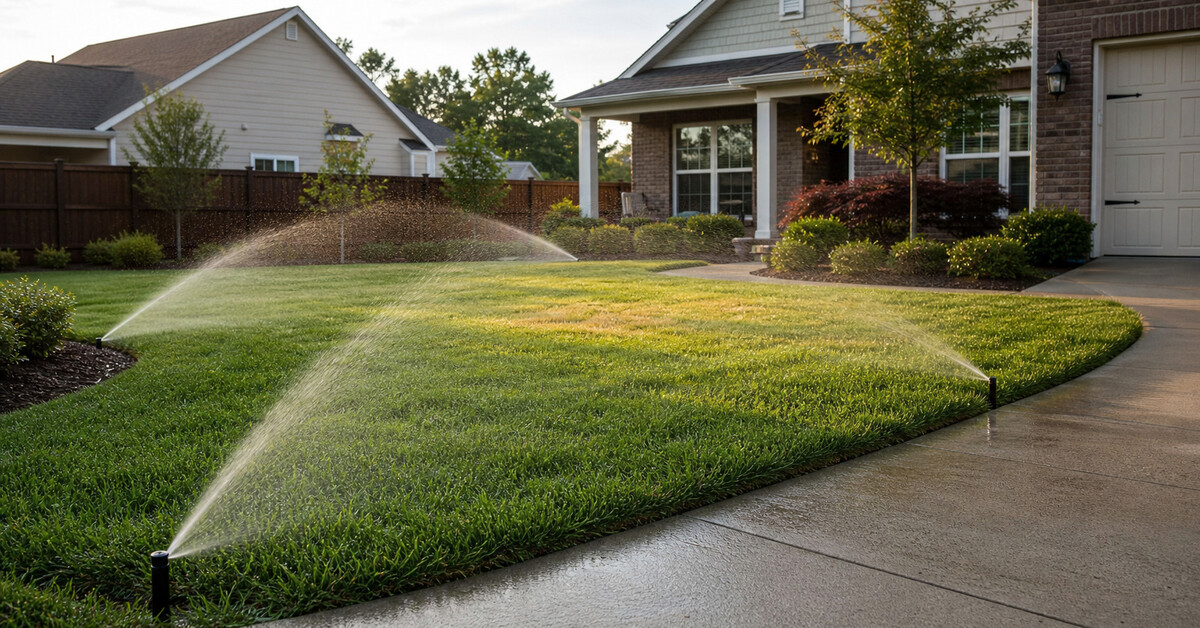
The shape, location, and timing of a dry area provide useful context. A narrow strip along a walk tells a different story than a round patch near one sprinkler head. A large section that stays dry points toward an entire zone that is not operating. A spot that appeared after a bed was enlarged, sod was replaced, or a patio was added often reflects a change in what the system now needs to water.
Homeowners do not need to diagnose the system themselves. Simple observations are more helpful than a guess about the part that failed. Note whether the area is always dry or only during certain cycles. Watch from a safe distance to see whether nearby heads rise and spray, whether water lands on pavement instead of turf, or whether one section does not run when other sections do. If water is pooling, flowing across a walk, or surfacing where it should not, stop using that zone and request service rather than digging around buried components.
These visible clues can help frame a sprinkler repair assessment without turning the homeowner into the technician. They also make it easier to explain the concern when scheduling service.
What Different Clues Suggest
Uneven or missing coverage
A sprinkler sometimes operates while still failing to water the intended area evenly. The spray can fall short, overlap poorly, or be blocked by plant growth. Heads can also become poorly aligned with the lawn or beds around them. In those cases, the next step is to determine whether the system needs adjustment, repair, or replacement. Coverage can also become outdated when a landscape changes, even if every visible component is working.
Look at the relationship between the dry patch and the water that reaches it. A sharp dry edge near a wet area can be a coverage clue. Water repeatedly striking a driveway, wall, or walkway while nearby turf stays dry is another. Neither observation identifies the exact correction, but both give the irrigation professional a clearer starting point.
Damaged heads, leaks, or low output
A broken or damaged sprinkler head can create obvious spray, a weak pattern, or water collecting close to the head instead of reaching the intended area. A visible leak can also reduce useful water in part of the system. These conditions can call for sprinkler repair, but the component and the surrounding coverage still need to be checked before a specific repair is recommended.
A soggy area beside a dry area is especially worth mentioning. It can show that water is present but not moving where the landscape needs it. Avoid pulling, turning, or excavating around the head. Buried lines and fittings can be damaged by an attempted adjustment when the source of the problem is not yet known.
An inactive zone
When one broad section remains dry while the rest of the property receives water, an inactive zone can be involved. The cause could relate to a valve, the controller, or another part of the installed system. The size of the dry area and the fact that several heads remain inactive at the same time are often more useful clues than one dry patch viewed by itself.
An irrigation evaluation can consider the controller, valves, zones, heads, and visible leaks together. That wider view matters because replacing one head would not address a zone that is not receiving the command or water it needs.
Controller concerns
A controller affects when zones run and for how long, but a schedule concern should not be assumed to be the only cause of dry turf. If the displayed program does not match what happens in the yard, note the difference. Also mention power interruptions, seasonal startup, or recent changes you noticed. A professional can determine whether the controller needs attention or whether the problem sits elsewhere in the system.
When the Irrigation System Is Not the Whole Answer
Watering and the surrounding landscape influence each other. A low area can stay wet while a nearby slope sheds water quickly. Compacted or shallow soil can behave differently from the soil around it. Shade patterns, mature plant growth, fresh sod, expanded beds, and new hardscape can all change the amount of water an area receives or needs.
Grading is an important example. If water runs off a slope before it can soak into the dry area, adding more watering time can simply move more water downhill. If a depression remains soft while nearby turf dries, the question can involve both water delivery and how water moves across the site. Complete Lawn Service also handles residential drainage and grading when those conditions are relevant.
Landscape changes matter too. A head that once watered open turf now sits behind a growing shrub. A newly widened planting bed often needs different coverage than the former lawn area. New sod has establishment needs that are different from established turf, so a persistent dry area after installation deserves a look at both the system and the site. For broader changes, the Landscape Design and Install service can address planting, sod, drainage, and grading questions that go beyond sprinkler system repair.
Repair, Adjustment, or Wider Property Work?
The cause determines the scope. Confirmed damage, a visible leak, an inactive zone, a valve concern, or a controller problem can point to irrigation repair. If the system runs but misses the intended lawn or bed, the coverage needs adjustment. When grading, drainage, soil, sod, planting, or construction has changed the site, the answer can extend beyond the irrigation system.
Sometimes more than one condition is present. A head sometimes needs repair while nearby growth also blocks coverage. A functioning zone still waters a lawn area that was reshaped during other work. Looking at the system and the affected area together helps avoid treating one visible clue as the complete answer.
This is also where coordination with annual landscape maintenance can be useful for homeowners already considering recurring mowing, edging, trimming, bed care, and seasonal materials. Maintenance does not replace an irrigation diagnosis, but ongoing changes in beds and plant growth can affect what sprinkler coverage looks like over time.
What to Share When You Request Irrigation Repair
A clear description helps the conversation begin in the right place. Share where the dry area sits, how large it is, when you first noticed it, and whether it changed after landscape or hardscape work. Mention any broken heads, unusual spray, pooling, visible leaks, inactive zones, or differences between the controller display and what happens outside. Photos of the affected area can add context without requiring you to handle the system.
For residential properties in Northwest Georgia, Complete Lawn Service works in Cartersville, Calhoun, Rome, Adairsville, Kingston, and Emerson. You can review the full service area list or request an estimate with the property address and symptoms. To talk through the concern, call or text (770) 629-0903.
Frequently Asked Questions
Is every dry spot an irrigation repair problem?
No. Common causes include sprinkler coverage, a damaged component, an inactive zone, grading, soil, plant growth, and recent landscape changes. The cause should be checked before a repair or adjustment is recommended.
What clues suggest an irrigation system issue?
Visible leaks, broken heads, weak or unusual spray, pooling near a head, or a zone that does not run can suggest a system issue. Those clues help guide an evaluation, but they do not identify the exact repair by themselves.
Can landscape changes affect sprinkler coverage?
Yes. New beds, growing shrubs, sod, patios, walkways, and grading changes can alter what an existing system needs to water or block a pattern that once reached open turf.
When should I request sprinkler system repair?
Request service when dry areas persist, a component appears damaged, water is leaking or going where it should not, a zone stays inactive, or the controller and the yard do not appear to match. Share the symptoms and avoid digging around buried components.